

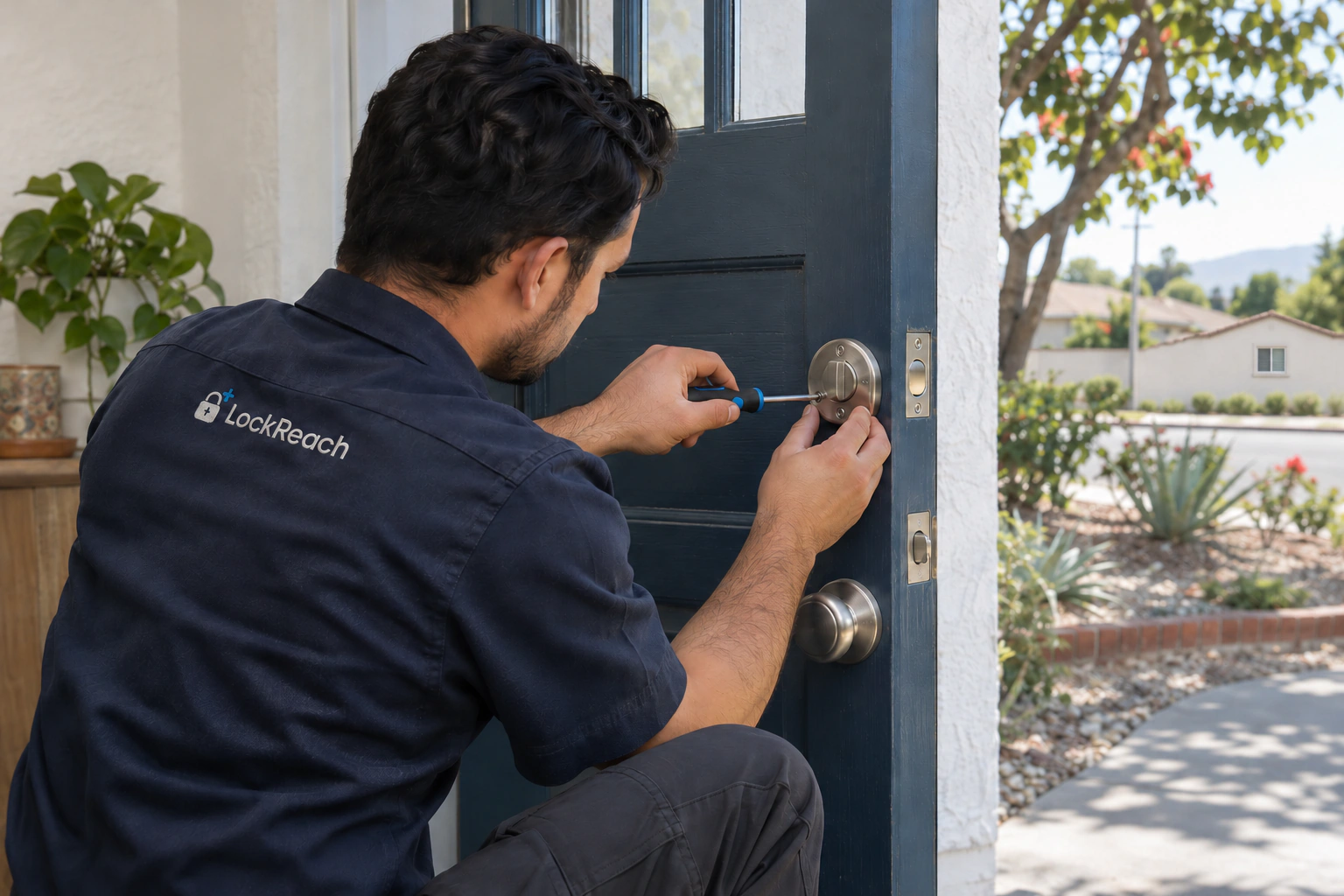
After a move or a lost key, it is natural to wonder whether every lock needs replacing. Often the more useful question is what you want to change. Do you want an old key to stop working, a troublesome door to become reliable or a different kind of hardware? These are distinct goals. For a La Puente home, LockReach can discuss the existing locks and help establish what needs assessment. Call 626-435-9510 with the doors involved and the reason you are considering work.
Rekeying is an access change
In a suitable lock, rekeying changes the internal arrangement so a different key operates it. Much of the visible hardware can remain. That can make it worth discussing when the lock works normally but the history of the keys is uncertain, or when someone should no longer have access.
Compatibility matters. Different locks are not automatically candidates for one shared key, and condition must be considered before work is proposed. Rekeying does not restore a worn handle, correct the way a door hangs or solve every cause of a difficult key. It answers an access question, not every possible door problem.
Replacement changes the hardware
A replacement may be appropriate when a component is damaged, unreliable, incompatible with the desired arrangement or unsuitable for the way the entrance is used. The new hardware still needs to fit the door and work with its closing action. Choosing a product by its photograph does not establish that fit.
If you want to retain an existing handle or the appearance of an older entrance, explain that before selecting parts. The assessment can distinguish what might remain from what actually needs changing. A preference to keep hardware is useful information, but it is not a guarantee that every part can be repaired or reused.
A sticking door is a separate clue
Does the key turn only when you pull the door toward you? Does the latch miss its opening unless the handle is lifted? Those observations suggest that the door and frame relationship belongs in the assessment. Changing the key arrangement alone may leave the original complaint untouched.
Describe what happens during normal use and avoid repeatedly forcing the mechanism. You do not need to dismantle anything to make a useful call. An explanation of the proposed work should connect it to the symptom you reported.
Make a short list before booking
List the exterior doors you want included, the keys that currently operate them and any door that behaves unreliably. Keep independently occupied areas and shared entrances distinct. If you rent, establish who can authorize the requested change and whether the property manager needs to be involved.
La Puente includes both established houses and multifamily properties, so there is no single access arrangement to assume. A side entrance may be used more often than the front, while a common building door may sit outside a tenant's control. Work from the actual property rather than a generic list of upgrades.
Questions worth asking before you agree
Ask which locks can remain, why any replacement is recommended and what the estimate includes. If inspection is needed before a final price, clarify that process and any assessment charge. Additional work should be explained before it becomes part of the agreement.
At handover, check the doors included in the job and establish which keys should operate them. Keep the record of the change. For a residential locksmith conversation in La Puente, call LockReach at 626-435-9510 and describe the result you need. A clearer access arrangement begins with a clearer decision about the existing hardware.
A few useful answers.
Does rekeying make a damaged lock reliable?
No. Its condition needs assessment, and a repair or replacement may be required separately.
Can I decide from the age of the lock alone?
Age is only context. Condition, compatibility and the way the door works are more useful factors.